How to Avoid MBBS Abroad Scams in 2026: Red Flags & Verification
Learn how to avoid MBBS abroad scams in 2026 with verified red flags, NMC checks, and expert tips to secure your medical future.
9 min readStudy Abroad
Your complete guide to medical education for Indian students
36+
Universities
20,000+
Indian Students
6
Years Duration
₹1L-23.5L
Annual Fees
English
Medium
Varied
Climate
NMC
Approved
₹15-40 Lakhs
Total Cost
MBBS in China for Indian students costs approximately ₹35-50 Lakhs for the complete programme (tuition, hostel and living) at NMC-recognised medical universities. NEET qualification is mandatory, and the degree makes you eligible for the FMGE/NExT licensing exam required to practise in India.
36
Universities listed
30
NMC approved
26
Cities with med colleges
$4,000–$120,000
Annual tuition range
5%–35%
FMGE pass-rate range
1894
Oldest university (est.)
Figures derived from the 36 China medical universities listed on iAMBBS.
A quick look at China universities by FMGE record and history
| University | City | Established | FMGE % |
|---|---|---|---|
| Shihezi University | Shihezi | 1949 | 35% |
| Jinan University | Guangzhou | 1906 | 30% |
| Beihua University | Jilin | 1906 | 26% |
| Huazhong University of Science and Technology | Wuhan | 1952 | 25% |
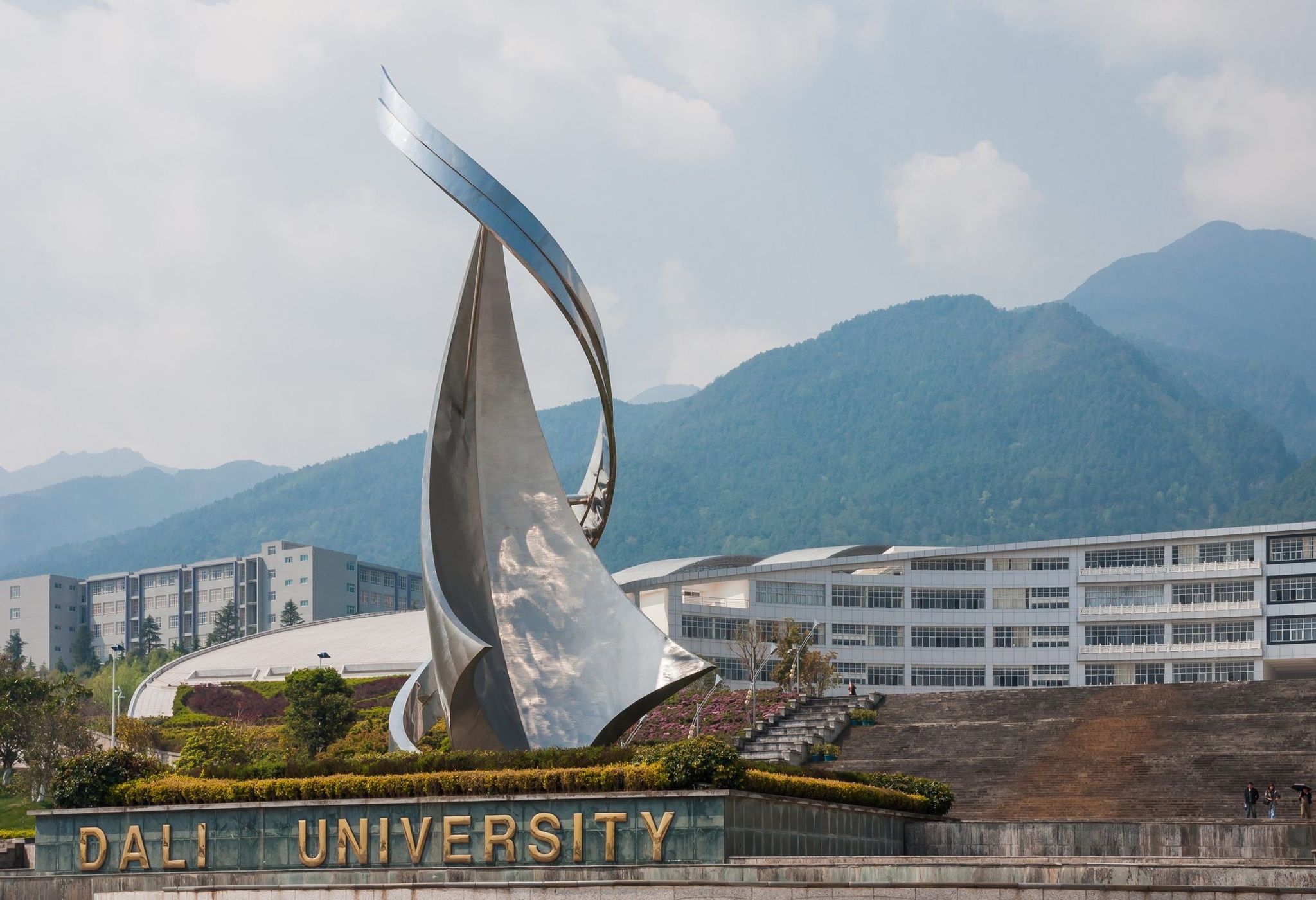
| Dali University | Dali | 1947 | 22% |
| Wenzhou Medical University | Wenzhou | 1912 | 20% |
105 universities sorted by annual tuition· Last updated 3 August 2026
| University | City | Tuition/yr | Total (6yr) | NMC | FMGE % |
|---|---|---|---|---|---|
| Central South University Xiangya School of Medicine | Changsha | $2,222 | $13,332 | ✓ | — |
| Shandong University School of Medicine | Jinan | $3,000 | $18,000 | ✓ | 10% |
| Wuhan University School of Medicine | Wuhan | $3,033 | $18,198 | — | 10.93% |
| Nanjing Medical University | Nanjing | $3,400 | $20,400 | — | 15.66% |
| Chengdu University of TCM | Chengdu | $3,472 | $20,832 | — | — |
| Henan University of Science and Technology | Luoyang | $3,500 | $21,000 | — | — |
| Zhejiang University School of Medicine | Hangzhou | $3,500 | $21,000 | — | 30.77% |
| Henan Normal University | Xinxiang | $3,500 | $21,000 | — | — |
| Ningbo University School of Medicine | Ningbo | $3,525 | $21,150 | ✓ | — |
| Beihua University School of Medicine | Jilin | $3,700 | $22,200 | ✓ | 25.79% |
| Beihua University | Jilin | $3,703 | $22,218 | ✓ | — |
| Nanchang University Medical College | Nanchang | $3,833 | $22,998 | — | — |
| Ningxia University | Yinchuan | $3,927 | $23,562 | ✓ | — |
| Peking University Medical Science Center | Beijing | $4,167 | $25,002 | — | — |
| China Medical University | Shenyang | $4,167 | $25,002 | ✓ | 13.89% |
Over 9,000 Indian students currently pursue MBBS across 44 Ministry of Education-approved universities in China. The average total course investment ranges between ₹20-40 lakhs for the complete six-year program. This cost remains significantly lower than the ₹50-1.2 crore donation fees charged by Indian private medical colleges.
Chinese medical universities treat over 1 million patients annually, ensuring high clinical exposure for interns. The Chinese Ministry of Education prohibits bilingual curricula, mandating 100% English-medium instruction for international batches. Indian Embassy verification confirms NEET-UG qualification is mandatory for all applicants seeking admission in 2026.
Safety standards include campus CCTV coverage and dedicated police stations near major medical hubs like Wuhan and Shanghai. Vegetarian food options are available in 90% of university hostels to accommodate Indian dietary preferences. Government CSC scholarships cover up to 100% tuition for top-performing candidates entering the 2026 session.
| City | Avg Tuition (₹/Year) | Monthly Living (₹) | Hostel Capacity |
|---|---|---|---|
| Beijing | ₹4.5-5.5 Lakh | ₹15,000-20,000 | 5,000+ Beds |
| Shanghai | ₹5-6 Lakh | ₹18,000-25,000 | 6,000+ Beds |
| Wuhan | ₹3.5-4.5 Lakh | ₹12,000-15,000 | 4,500+ Beds |
| Guangzhou | ₹4-5 Lakh | ₹14,000-18,000 | 5,500+ Beds |
| Chongqing | ₹3-4 Lakh | ₹10,000-14,000 | 4,000+ Beds |
| Xi’an | ₹3-4 Lakh | ₹10,000-13,000 | 3,500+ Beds |
Infrastructure development in China ensures reliable internet connectivity and modern laboratory equipment in all accredited campuses. Families save approximately ₹30-50 lakhs compared to securing a seat in an Indian private college. Graduates gain global exposure while maintaining eligibility to appear for the FMGE screening test upon returning home.
Over 9,000 Indian students were enrolled in Chinese medical schools during the last academic year. The Chinese Ministry of Education currently authorizes only 44 universities to teach MBBS in English to foreigners.
Families should verify the 44 approved institutions listed by the Indian Embassy before paying the average ₹20-40 lakh course fee.
The standard medical curriculum in China operates on a rigid six-year cycle, allocating five years to theoretical and practical training plus one mandatory year of clinical internship. Only 44 specific institutions currently hold Ministry of Education approval to offer this degree in English to international applicants.
Enrollment data confirms that over 9,000 Indian students were actively pursuing their degrees within this regulated system during the 2025-26 intake cycle. Financial commitments for the full course duration generally fall between ₹20 to ₹40 lakhs, heavily dependent on whether the campus is located in Tier 1 cities like Beijing or Shanghai versus lower-cost provinces.
Strict Ministry of Education guidelines explicitly ban bilingual teaching models, enforcing 100% English-medium delivery for the 44 designated international student cohorts. Graduates receive a Bachelor of Medicine and Surgery degree, but eligibility to practice in India remains conditional on passing the National Medical Commission's FMGE screening test.
China currently hosts over 44 Ministry of Education (MOE) approved universities authorized to teach MBBS in English to international students. Approximately 9,000 Indian students were enrolled across these institutions during the 2025-26 academic session. Average annual tuition ranges between ₹3.5 lakh to ₹5.5 lakh depending on the city and university ranking.
| University Name | City | Annual Fees (₹) | NMC Status (2026) | Medium of Instruction | Indian Students (Approx.) |
|---|---|---|---|---|---|
| Chongqing Medical University | Chongqing | ₹3.51 lakh | NMC Approved | English | 550+ |
| Anhui Medical University | Hefei | ₹3.20 lakh | NMC Approved | English | 480+ |
| Capital Medical University | Beijing | ₹4.50 lakh | NMC Approved | English | 750+ |
| Fudan University (Basic MEd) | Shanghai | ₹5.20 lakh | NMC Approved | English | 400+ |
| Tianjin Medical University | Tianjin | ₹3.80 lakh | NMC Approved | English | 620+ |
| Southern Medical University | Guangzhou | ₹4.00 lakh | NMC Approved | English | 710+ |
| Jilin Medical University | Changchun | ₹3.00 lakh | NMC Approved | English | 430+ |
| Dalian Medical University | Dalian | ₹3.50 lakh | NMC Approved | English | 580+ |
| Guangxi Medical University | Nanning | ₹3.20 lakh | NMC Approved | English | 490+ |
| Shandong First Medical University | Jinan | ₹3.60 lakh | NMC Approved | English | 510+ |
| Guangzhou Medical University | Guangzhou | ₹3.80 lakh | NMC Approved | English | 530+ |
| Harbin Medical University | Harbin | ₹4.20 lakh | NMC Approved | English | 650+ |
Selecting the correct institution directly impacts future FMGE pass rates and clinical exposure quality.
As of the 2026 academic session, Indian students must qualify in the NEET-UG exam to be eligible for admission to any of the 44 MOE-approved institutions. Candidates must complete a minimum of 17 years of age by December 31st of the admission year to register for the six-year course. The National Medical Commission mandates these strict criteria to ensure graduates remain eligible for the Foreign Medical Graduates (FMGE) screening test upon returning to India.
| University Name | City | Min. 12th Grade % | Est. Total Course Fee (INR) |
|---|---|---|---|
| Peking University Health Science Center | Beijing | 50% | ₹28 Lakh |
| Fudan University School of Public Health | Shanghai | 50% | ₹32 Lakh |
| Shanghai Second Medical College | Shanghai | 50% | ₹30 Lakh |
| Capital Medical University | Beijing | 50% | ₹26 Lakh |
| Southern Medical University | Guangzhou | 50% | ₹24 Lakh |
| Xi'an Jiaotong-Liverpool (MEd) | Suzhou | 50% | ₹29 Lakh |
Meeting these specific benchmarks ensures your degree remains valid for NMC registration and future practice in India.
Chinese Ministry of Education restricts English MBBS to exactly 44 approved universities for international students. Indian students must secure admission offers before May 2026 for the September intake.
Following this exact sequence guarantees legal entry and NMC-compliant enrollment for the 2026 academic cycle.
Over 9,000 Indian students currently pursue MBBS in China during the 2025-26 session. Total course expenses range between ₹20 lakh and ₹40 lakh for six years. This remains significantly lower than Indian private college donations exceeding ₹50 lakh.
| Expense Category | Annual Cost (₹) | Total 6-Year Cost (₹) | Notes |
|---|---|---|---|
| Average MBBS Fees | ₹3 lakh - ₹8 lakh | ₹20 lakh - ₹40 lakh | Affordable for international students |
| Tuition Fee (Chongqing Medical University) | ₹3.51 lakh | ₹21.06 lakh | Increased annually |
| Tuition Fee (Anhui Medical University) | ₹3 lakh - ₹4 lakh | ₹18 lakh - ₹24 lakh | Fixed rate structure |
| Hostel Accommodation | ₹1.5 lakh - ₹2 lakh | ₹9 lakh - ₹12 lakh | On-campus dormitory rates |
| Monthly Food Costs | ₹1 lakh - ₹1.5 lakh | ₹6 lakh - ₹9 lakh | Vegetarian meals available |
| Student Visa Fee | ₹15,000 - ₹20,000 | ₹15,000 - ₹20,000 | One-time processing charge |
| Medical Insurance | ₹20,000 - ₹30,000 | ₹1.2 lakh - ₹1.8 lakh | Mandatory annual coverage |
| Books & Supplies | ₹50,000 - ₹75,000 | ₹3 lakh - ₹4.5 lakh | Textbooks and lab kits |
Families should budget for annual payments rather than a single lump-sum transaction.
Parents must verify if the quoted fee includes accommodation or excludes IT entirely. Many top-tier universities in Beijing and Shanghai charge higher living costs compared to provincial cities. Always confirm the exact currency denomination before signing the admission agreement.
Indian students must submit exactly 10 specific documents to secure admission at one of the 44 MOE-approved medical universities in China for the 2026 intake. The Chinese Ministry of Education mandates these papers for all international applicants seeking the 6-year MBBS program.
All educational documents must be notarized at the Notary Public office before being mailed to the university admissions office.
The 44 MOE-approved medical universities determine eligibility for the X1 student visa in 2026. The Embassy of India in Beijing requires verified NEET-UG scorecards to validate the purpose of the student visa application.
Successful applicants receive a visa valid for the entire 6-year duration of the Bachelor in Clinical Medicine program. Any university outside the official MOE list cannot issue the JW202 form required for legal entry into China.
Currently, more than 9,000 Indian students maintain active student visas across major Chinese educational hubs. This volume reflects the high demand for affordable medical education costing ₹20-40 lakhs total.
Only graduates from the 44 MOE-approved Chinese universities qualify for NMC registration in India. Students must clear the NEET-UG exam prior to enrolling in any 2026 intake batch to maintain future FMGE eligibility. The total course cost typically falls within the ₹20-40 lakh range over the mandatory six-year period.
The Chinese Ministry of Education strictly prohibits bilingual curricula, mandating 100% English-medium instruction for foreign students. Failure to attend one of the 44 designated institutions results in an ineligible degree for Indian medical practice. Approximately 9,000 Indian students currently enrolled in China must complete a 12-month clinical internship within the People’s Republic of China.
| Compliance Factor | Requirement Detail | Impact on FMGE | Target Metric |
|---|---|---|---|
| NEET Qualification | Mandatory for all intakes | Eligibility Gatekeeper | Min 50th Percentile |
| University Status | Must be on 44-uni MOE List | Degree Validity | 100% Verification |
| Program Duration | 5 Years Study + 1 Year Internship | Minimum 6 Years | 21600 Hours Clinical |
| Language Policy | English Medium Only | No Bilingualism | 100% English Syllabus |
| Internship Site | Within PRC Territory | Mandatory Rotation | 12 Consecutive Months |
| Screening Test | FMGE (National Board) | License to Practice | Pass Mark 50% |
Recent data indicates over 9,000 Indian students are currently pursuing their MBBS across these 44 authorized campuses. Candidates must appear for the Foreign Medical Graduate Examination (FMGE) upon returning to India to obtain provisional registration. The National Medical Commission requires proof of a completed 12-month rotating internship before granting permanent practice rights.
Most NMC-recognized universities in China mandate on-campus accommodation for first-year international students in cities like Shanghai and Beijing. Accommodation near top medical schools like Fudan University typically costs between ₹5,000 to ₹15,000 per month.
With over 9,000 Indian students currently enrolled, support systems are well-established around major campuses. Dietary needs are met in cities like Guangzhou, where hostels provide specific vegetarian counters for international residents.
Monthly living expenses generally range from ₹10,000 to ₹15,000 in Tier 1 cities. Transport passes covering 30+ Chinese cities allow students to commute easily between districts. Security is maintained via 24/7 CCTV surveillance active in all 44 MOE-approved medical institutions.
As of 2026, over 9,000 Indian students are enrolled in MBBS programs across China, drawn by the average total course cost of ₹20-40 lakhs. The Chinese Ministry of Education strictly limits English-taught MBBS admissions to only 44 approved universities to maintain quality control. Indian students must pass NEET-UG to secure admission and remain eligible for the FMGE screening test upon returning to India.
| Advantages | Disadvantages |
|---|---|
| Affordable tuition costs and living expenses | Only 44 universities are qualified to teach MBBS degrees in English |
| Quality of lifestyle | Teaching MBBS course under a bilingual (English/Chinese) model is strictly forbidden by the Chinese MOE |
| Clinical exposure | Universities not on the MOE list should not admit foreign students for MBBS in English |
| Affordability | NEET-UG is a mandatory requirement for Indian students |
| High quality of education | Indian students must qualify for NEET to apply for the FMGE screening test after graduating |
| Close proximity to India | The Chinese Ministry of Education (MoE) has warned that teaching MBBS courses under a bilingual curriculum in English and Chinese is ‘strictly prohibited’ |
| In the last academic year, more than 9,000 Indian students were studying MBBS in China | The average MBBS fees in China for Indian students is around Rs. 20-40 lakhs for the complete course duration |
| The duration of English-medium MBBS programs in China is six years | The 6th year is a mandatory internship year limiting early graduation |
Families must weigh the significant cost savings against the strict language and university eligibility restrictions before committing to a five-year financial plan.
Graduates from the 44 Ministry of Education (MOE) approved universities in China are eligible to sit for the Foreign Medical Graduate Examination (FMGE) to practice in India. With over 9,000 Indian students currently enrolled across these institutions, the returning workforce faces stiff competition for limited internship slots. Clearing the FMGE is mandatory for this large cohort to obtain permanent registration with the NMC.
Students completing their 6-year course at top-tier institutes like Shanghai Jiao Tong University can apply for NEET-PG to enter specialized MD/MS courses. Successful candidates may specialize in fields ranging from General Practice to Super-Specialties like Neurology. The transition period typically spans 12 months of compulsory rotation before full practice begins.
Practicing medicine directly in China requires passing the National Medical Licensing Examination (NMLE) administered in Mandarin. Most Indian students lack the required HSK Level 5 Chinese language proficiency needed for local clinical practice. Consequently, the primary career trajectory involves returning to India after clearing the mandatory six-month rotating internship.
The Chinese Ministry of Education currently approves exactly 44 universities for English-medium MBBS programs. Indian students must verify their chosen college appears on this official MoE list before paying fees.
Diligent verification of these 8 factors ensures your degree remains valid for practice in India.
Post-pandemic protocols stabilized by 2023 allowing full in-person classes at all 44 approved universities. Enrollment recovered to over 9,000 Indian students during the 2025-26 academic session. Clinical training mandates require physical presence in hospitals throughout the six-year degree.
Tuition costs stabilized between ₹20-40 lakhs without emergency pandemic levies. The Ministry of Education strictly prohibits hybrid or bilingual teaching models introduced during lockdowns. Travel restrictions lifted in 2023 allow direct flights to cities like Wuhan and Shanghai.
Yes, the degree is valid only if the university is on the NMC (formerly MCI) approved list. As of 2025, the Chinese Ministry of Education has specifically approved only 44 medical universities to teach MBBS in English. Applicants must cross-check the specific institute code against the 2025 NMC website.
The average total cost ranges between ₹20 lakh to ₹40 lakh for the complete six-year course. Annual tuition typically falls between ₹3 lakh to ₹8 lakh depending on the city and university tier. This is lower than the ₹10-20 lakh capitation fees often demanded by private colleges in India.
Yes, qualifying NEET-UG is a mandatory requirement for all Indian students wishing to study medicine abroad, including China. The Embassy of India in Beijing confirmed that without a valid NEET score, students cannot secure a seat. Additionally, this score is required later to appear for the FMGE screening test upon returning to India.
Courses are available in English, but only at the 44 universities explicitly authorized by the Chinese Ministry of Education. The Chinese Ministry of Education issued a strict ban on non-English medium instruction in 2024. Students must confirm the institution is on the official MOE list for English-medium instruction.
The standard duration is six years, which includes five years of theory and one mandatory clinical internship year. Upon completion of the sixth year, students receive their Bachelor in Clinical Medicine degree. This follows the World Directory of Online Higher Education standards for basic medical qualifications.
Graduates must first qualify for the Foreign Medical Graduate Examination (FMGE) conducted by NBEMS to register with the NMC. Candidates face a rigorous written and practical assessment process to validate foreign qualifications. Failure to qualify bars them from practicing in any Indian state.
Monthly living costs excluding tuition generally range from ₹15,000 to ₹25,000 depending on the city tier. Major cities like Beijing or Shanghai will be on the higher end of this spectrum compared to smaller provincial capitals. Budget at least ₹50,000 monthly when adding hostel rents in Tier 1 cities.
Top institutions include those on the MOE list such as Peking University Health Science Center or Shanghai Jiao Tong University School of Medicine. However, there are exactly 44 universities currently eligible to admit international students for English-taught MBBS programs. More than 9,000 Indian students were enrolled across these campuses in the last academic year.
Get personalized guidance on university selection & admission process in China
We're online 24/7
"Our expert counselors will guide you through every step of your MBBS journey in China."
NMC approved medical universities for Indian students

Annual Fees
$4,950 (₹4,20,750)/year
Total Cost
$60,000 (₹51,00,000)

Annual Fees
$4,000 (₹3,40,000)/year
Total Cost
$22,220 (₹18,88,700)

Annual Fees
$6,000 (₹5,10,000)/year
Total Cost
$60,000 (₹51,00,000)

Annual Fees
$4,000 (₹3,40,000)/year
Total Cost
$60,000 (₹51,00,000)

Annual Fees
$4,500 (₹3,82,500)/year
Total Cost
$60,000 (₹51,00,000)
Annual Fees
$4,000 (₹3,40,000)/year
Total Cost
$36,000 (₹30,60,000)

Annual Fees
$6,000 (₹5,10,000)/year
Total Cost
$60,000 (₹51,00,000)
Annual Fees
$6,000 (₹5,10,000)/year
Total Cost
$60,000 (₹51,00,000)
45 subjects across 12 semesters
Head-to-head comparison across 10 parameters
| Parameter | India | China | Advantage |
|---|---|---|---|
| total_cost_inr | 50-75 lakhs (private) / 5-15 lakhs (govt) | 20-40 lakhs (6 years total) | 🏆 China |
| duration | 5.5 years (4.5 academic + 1 internship) | 6 years (5 academic + 1 internship) | 🏆 India |
| medium_of_instruction | English | English (Years 1-3), Chinese Mandarin required (Years 4-6) | 🏆 India |
| clinical_rotation_language | English + Regional language | Chinese Mandarin (HSK-4 level required — biggest challenge) | 🏆 India |
| fmge_next_requirement | Not required (domestic graduate) | FMGE/NExT mandatory (19.2% pass rate 2024 — very low) | 🏆 India |
| recognition | NMC directly recognized | 45 NMC-approved universities (pre-COVID), WHO listed | 🏆 India |
| clinical_training_quality | Excellent — high patient volume, diverse cases | Excellent infrastructure — modern hospitals, advanced tech, but Chinese language limits learning | 🏆 India |
| living_conditions | Home country — familiar food, culture, family | Modern cities, developed infrastructure, limited Indian food, cultural gap | 🏆 India |
| safety | Varies by city, generally safe campus environments | Very safe, strict law enforcement, but occasional COVID lockdown concerns | 🤝 Tie |
| career_prospects | Direct registration, PG via NEET PG, established career path | Practice in India after FMGE. Low pass rate is a career risk. | 🏆 India |
Learn how to avoid MBBS abroad scams in 2026 with verified red flags, NMC checks, and expert tips to secure your medical future.
An honest China vs Philippines MBBS comparison for Indian students: English-medium vs Mandarin clinical years, BS+MD vs direct MBBS, approximate costs, FMGE outcomes and who should pick which.
Discover remote job opportunities after MBBS abroad in 2026 — from telemedicine to global healthcare roles with flexible work options.
Plan your MBBS in the Philippines 2026: Know fees, NMC-approved colleges, FMGE pass rates, and career scope.
Explore other popular destinations with similar features
Get personalized guidance on university selection, admission process, and visa assistance from our expert counselors.