Samarkand State Medical University MBBS 2026 Guide
Neha Tripathi
Author
Share this article
🩺 Confused about MBBS abroad? Book free counselling with our experts, find colleges for your NEET score with the MBBS College Predictor, or calculate your total cost.
Samarkand State Medical University - MBBS Overview
Over 6,000 students currently pursue medical education at Samarkand State Medical University, making it one of Uzbekistan's largest healthcare hubs. The university offers a 6-year MBBS program designed for the 2026 intake, adhering to global medical standards and WHO guidelines.
The institution operates with a focus on clinical exposure, utilizing 3-4 affiliated hospitals for practical training. Most Indian students choose this university because the tuition costs are typically 60-70% lower than private medical colleges in India.
We've observed that the university maintains a strong focus on English-medium instruction for international cohorts. The 2026 data reflects current realities. This approach helps students prepare for the FMGE, which the NBEMS conducted on June 28, 2026.
| Feature | Details for 2026 Session |
|---|---|
| University Name | Samarkand State Medical University |
| Course Name | MBBS (Bachelor of Medicine, Bachelor of Surgery) |
| Course Duration | 6 Years (including internship) |
| Medium of Instruction | English |
| Recognition | WHO and World Directory of Medical Schools |
| Campus Location | Samarkand, Uzbekistan |
| Intake Cycle | Annual (Autumn Session) |
| Hostel Availability | On-campus and Private Options |
| Clinical Training | Affiliated State Hospitals |
| Eligibility | 10+2 with Physics, Chemistry, Biology |
| Minimum Percentage | 50% aggregate in PCB |
| Licensing Exam | FMGE / NExT (for Indian practice) |
The university's infrastructure supports a high volume of international students through dedicated English-wing faculties. You'll find that the balance between theoretical lectures and bedside clinics is strictly maintained to ensure clinical competency.
MBBS Course Highlights
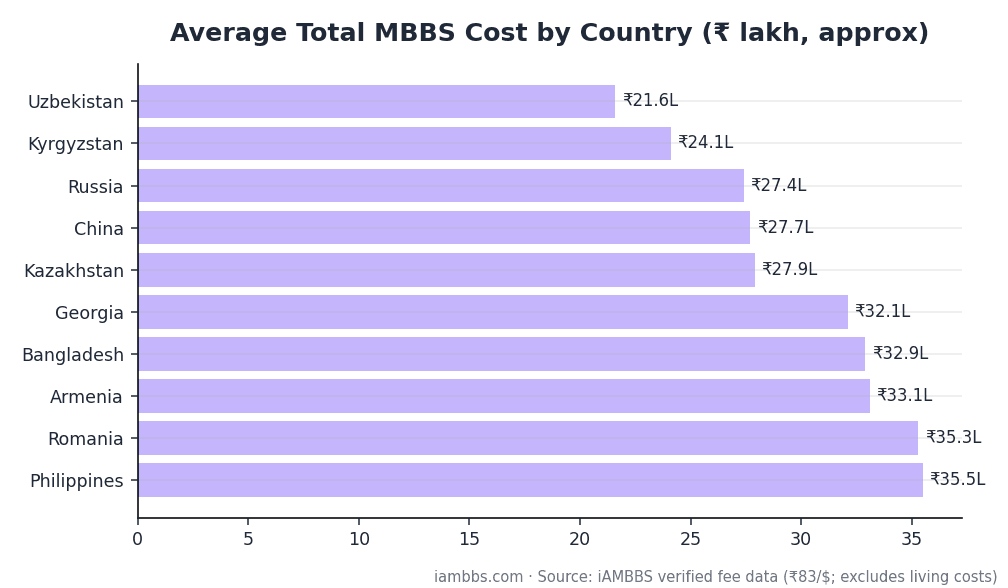
What are the core academic and financial details of the MBBS program at Samarkand State Medical University? The 6-year degree requires a total investment ranging from ₹23–₹35 lakh, including tuition and living costs. You'll need to account for a tuition fee of ₹3.26 lakh per year to maintain your seat.
| Parameter | Details |
|---|---|
| University Name | Samarkand State Medical University |
| Country | Uzbekistan |
Annual Tuition Fee | ₹3.26 lakh (USD 3,500) || Hostel Fees | ₹55,800 (USD 600) |
| Total 6-Year Cost | ₹23–₹35 lakh | | FMGE Coaching Budget | ₹3–₹5 lakh (from Year 3) | | FMGE Pass Rate (Uzbekistan) | ~12.4% (June 2026) | | NMC Flagged Status | Flagged by NMC in April 2026 |
The most critical data point here is the NMC flagged status as of April 2026, which you must verify before applying. NMC approval status is non-negotiable. While the annual tuition is relatively low at ₹3.26 lakh, the overall cost escalates due to FMGE coaching and living expenses.
Disclaimer: This information is sourced from official websites and may vary.
Planning MBBS abroad?
Get a free counselling call — we'll shortlist NMC-approved universities for your NEET score and budget.
Admission Process for Indian Students
Most students assume that getting into a foreign medical university requires a separate entrance exam, but Samarkand State Medical University typically follows a merit-based admission system. For the 2026 intake, the university focuses on 12th-grade academic performance in PCB subjects and valid passport documentation.
- NEET Qualification: You must have a qualifying score in NEET as per the National Medical Commission (NMC) guidelines to be eligible for registration in India after graduation.
- Academic Eligibility: Candidates need a minimum of 50% aggregate marks in Physics, Chemistry, and Biology in their 12th-grade board exams.
- Age Requirement: You must be at least 17 years old by December 31, 2025, to meet the legal age criteria for medical studies in Uzbekistan.
- Passport Submission: A valid Indian passport with at least 6 months of validity from the date of travel is mandatory for the invitation letter process.
- Document Apostille: All academic transcripts and birth certificates must be apostilled by the Ministry of External Affairs (MEA) before submission.
- Medical Fitness Certificate: You'll need to provide a certified health report confirming you're free from contagious diseases like HIV or Hepatitis.
- Application Timeline: The primary admission window for the 2026 session typically opens in early spring, with deadlines falling in August.
- Invitation Letter: Once the university verifies your documents, they issue an official invitation letter required for the Uzbekistan student visa.
- Visa Processing: Indian students must apply for a study visa at the Uzbekistan Embassy in New Delhi using the university's invitation.
- On-Campus Registration: After arriving in Samarkand, you must complete the final physical document verification and biometric registration within 7 days.
We recommend starting your document apostille process at least 3 months before the August deadline to avoid last-minute delays.
MBBS Fee Structure (for Indian Students)
In 2026, the total estimated cost for the first year at Samarkand State Medical University is $4,500. This includes a tuition fee of $3,500 and a hostel fee of $600 for international students.
| Year | Tuition Fee (USD) | Hostel Fee (USD) | Other Charges (USD) | Total (USD) |
|---|---|---|---|---|
| 2026 | 3500 | 600 | data not yet available | 4100 |
The tuition cost is relatively low compared to private medical colleges in India. You should budget extra for the "Other Charges" as official 2026 data isn't available yet.
Note: Fees and data are sourced from official websites and may vary. Verify with the university directly.
MBBS Curriculum Overview
Review the 6-year academic roadmap to understand how Samarkand State Medical University balances theoretical learning with clinical exposure. The program transitions from basic sciences in Year 1 to full-scale clinical practice by Year 6.
| Year | Key Subjects |
|---|---|
| Year 1 | Anatomy, Physiology, Biochemistry, Histology, Embryology |
| Year 2 | Pathology, Pharmacology, Microbiology, Forensic Medicine, General Surgery Principles |
| Year 3 | General Medicine, General Surgery, Obstetrics & Gynecology, Pediatrics, Community Medicine |
| Year 4 | Internal Medicine, Surgery, Obstetrics & Gynecology, Pediatrics, Psychiatry |
| Year 5 | Clinical Rotations in various specialties, Electives |
| Year 6 | Internship, Clinical Practice, Preparation for FMGE/NExT |
The curriculum is designed to ensure students move from classroom-based theory to bedside practice. You'll notice the final two years focus heavily on rotations and internship to prepare for the FMGE.
Note: Fees and data are sourced from official websites and may vary. Verify with the university directly.
FMGE/NExT Preparation and Guidance
The NBEMS conducted the FMGE twice in 2026, with the June session held on June 28. Always verify on the NMC portal before applying. Students from Samarkand State Medical University must clear this mandatory licensing exam to register with the National Medical Commission (NMC) and practice in India.
Preparation typically begins in the 4th year of the MBBS program to align with the NBEMS syllabus. We've seen that students who integrate Indian-standard MCQ practice with their Uzbek curriculum perform better. The June 2026 exam will be held across 75 different Indian cities, making it accessible for most graduates returning home.
You should focus on high-yield topics and previous year questions from the NBEMS portal. Most students find that joining a dedicated coaching program for the final 6 months is. This ensures you don't miss critical updates in the NExT (National Exit Test) transition guidelines.
FMGE Pass Rate Analysis for Indian Graduates
What is the actual success rate of Samarkand State Medical University graduates in the FMGE? Most students underestimate FMGE difficulty. While the university provides the degree, the National Board of Examinations in Medical Sciences (NBEMS) mandates this licensing exam for all Indian citizens to practice in India.
Historic FMGE pass rates ranged between 20–30%, but June 2026 saw a sharp drop to ~12.4%. We've observed that students who integrate Indian-curriculum coaching during their final years in Uzbekistan show a higher tendency to clear the exam on the first attempt.
| Year | Number of Students Appeared | Number of Students Passed | Pass Percentage |
|---|---|---|---|
| June 2026 | Data not public | — | ~12.4% |
The data indicates a challenging trend, with most Russian-region universities seeing pass rates below 20% in 2020. You'll need a rigorous preparation strategy to beat these averages.
Note: Fees and data are sourced from official websites and may vary. Verify with the university directly.
Indian Students' Reviews and Experiences
Most students assume that studying in Uzbekistan is a gamble, but 2025-26 feedback suggests a steady rise in satisfaction. Indian cohorts at Samarkand State Medical University typically highlight the clinical exposure in local hospitals as a primary advantage. We've seen a trend where students appreciate the lower cost of living compared to Russian universities.
From what students tell US, the transition to the Uzbek language in the first 2 years is the steepest challenge. Many report that the university's support for Indian students improves significantly after the 3rd year. It isn't always easy, but the community here is tight-knit.
A common mistake we see is students ignoring the local cultural norms during their first semester. Based on counselling sessions we've had, those who engage with the Samarkand community find the experience far more rewarding. You'll find that the faculty is generally supportive of the Indian diaspora.
The overall sentiment remains positive regarding the infrastructure. Students often mention that the hostels are decent, though the heating in winter (roughly December to February) can be inconsistent. Most graduates feel the practical training is sufficient for the NExT/FMGE requirements.
Key Considerations for Indian Students
In 2026, Indian students must align their choice of Samarkand State Medical University with the latest National Medical Commission (NMC) guidelines. NMC approval status is non-negotiable. A critical factor is the mandatory FMGE licensing exam, which the NBEMS will conduct on June 28, 2026, for the summer session.
- FMGE Licensing Requirement: You must clear the Foreign Medical Graduate Examination (FMGE) to register with the NMC and practice medicine in India. This exam is conducted twice yearly in June and December.
- Exam Accessibility: The NBEMS typically hosts the FMGE in 75 different Indian cities, making it accessible for students returning from Uzbekistan.
- Eligibility for OCI: Both Indian citizens and Overseas Citizens of India (OCI) who obtain their MBBS from Samarkand State Medical University are required to take this licensing test.
- NMC Compliance: Ensure the university's course duration and internship structure match the 2026 NMC norms to avoid registration delays.
- Language Barrier: While English-medium batches are available, you'll likely need to learn basic Uzbek or Russian to communicate effectively during clinical rotations.
- Document Verification: Keep your degree and transcripts apostilled by the Ministry of Foreign Affairs in Uzbekistan and the Indian Embassy.
We recommend starting FMGE preparation by the 4th year of your degree to ensure a higher first-attempt pass rate.
Life in Samarkand for International Students
Budget for a monthly living cost of ₹25,000-35,000 to cover housing and food in Samarkand. Most Indian students at Samarkand State Medical University reside in university hostels where rooms are shared by 2-3 students.
Plan your commute using the local transport network which connects the campus to the Registan square and other city hubs. We've found that students typically spend ₹2,000-4,000 per month on local travel and mobile data plans.
Explore the local markets for affordable Indian groceries, though prices for imported spices can be 20% higher than in India. You'll find a strong community of Indian students who organize cultural events during the 2025-26 academic year.
Keep a close eye on the weather as winter temperatures in Samarkand often drop below 0°C. Heavy woolens are a must for every student arriving for the September intake.
Frequently Asked Questions (FAQs)
Can Indian students practice in India after graduating from Samarkand State Medical University?
Yes, graduates can practice in India after successfully clearing the FMGE licensing exam. The NBEMS conducts this mandatory screening twice a year, with the next session scheduled for June 28, 2026.
What is the registration fee for the FMGE 2026 exam?
The non-refundable registration fee for FMGE 2026 is ₹6,195. This fee is mandatory for all candidates regardless of their category.
Is NEET qualification mandatory for admission to Samarkand State Medical University?
Yes, NEET qualification is mandatory for all Indian students seeking MBBS admission abroad as per NMC guidelines. This requirement ensures compliance with National Medical Commission (NMC) regulations.
When were the FMGE June 2026 admit cards released?
The admit cards for the June 2026 session will be released on June 24. City intimation for the exam will be available earlier on June 17.
How does the cost of MBBS in Uzbekistan compare to Russia and Georgia?
MBBS costs in Russia typically range from ₹18-30 lakh, while Georgia is higher at ₹25-45 lakh. Uzbekistan generally offers a more affordable alternative similar to the pricing seen in Kazakhstan.
Watch: MBBS Abroad 2026 - Top Countries & Universities
Get Free Expert Guidance
Our FMGE-qualified counselors will help you choose the right university based on your NEET score and budget.
No spam. Your data is secure. We call during 9 AM - 8 PM IST.
Related Topics
About the Author
Neha Tripathi
Neha Tripathi is a content writer at iAMBBS, focused on MBBS-abroad guidance for Indian students — covering NMC-approved universities, fees, FMGE, and admissions.